Spreadsheet as Sacred Text: The Glorious Rise of the Hyperspecific Personal Archive

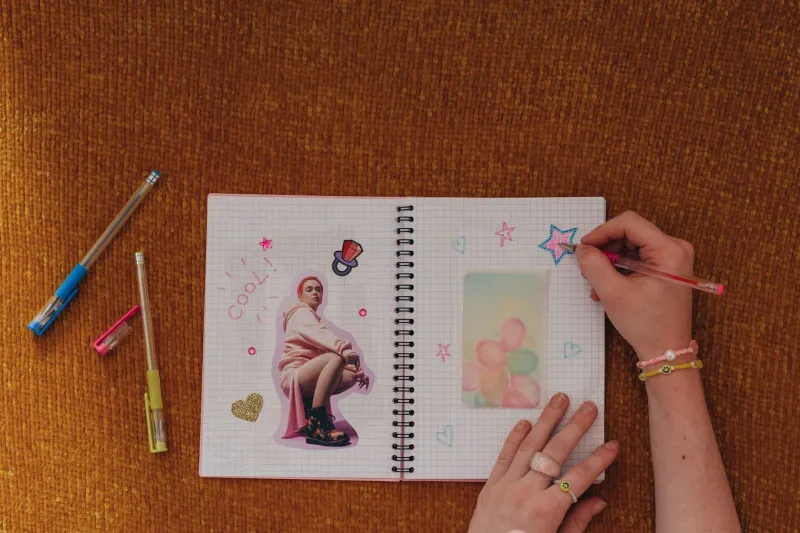
Photo: colorful organized spreadsheet notebook planning creative desk aesthetic, via images.stockcake.com
Somewhere right now, a perfectly normal person is updating a 47-tab Google Doc cataloging every meal their cat has refused since 2021. There's a color-coded legend. There are footnotes. There is almost certainly a pivot table involved. And honestly? It's one of the most beautiful things happening on the internet.
Welcome to the Unhinged Documentation Era — the quiet, deeply nerdy movement where ordinary Americans are turning the mundane details of their daily lives into something that reads less like a personal diary and more like a peer-reviewed academic paper on the subject of themselves.
The Google Doc Is the New Great American Novel
Let's be honest: nobody is finishing their novel. But people are finishing their 200-row outfit tracking spreadsheet, complete with a column for "vibes rating" and a dropdown menu for weather conditions at time of wearing. And that, friends, takes a different kind of discipline.
Personal archives have always existed — scrapbooks, journals, shoeboxes full of ticket stubs — but something shifted when the tools got weird and powerful and free. Google Docs, Notion, Airtable, and a dozen other platforms handed regular people the infrastructure of a small research institution, and regular people said, "Yes. I will use this to track every book I've ever abandoned and why."
The results are staggering in their specificity. People are maintaining:
- Sleep quality logs with nightly entries going back three years, cross-referenced against moon phases and dinner choices
- Friendship databases that note when they last reached out to each person, preferred communication style, and a running list of inside jokes so nothing gets lost
- Plant care histories detailed enough to make a botanist emotional
- "Vibe archives" — essentially emotional weather reports filed daily, tagged and searchable by mood, season, and which Spotify playlist was playing
Is this unhinged? Technically, sure. Is it also kind of magnificent? Absolutely.
Control Is the Whole Point (And That's Okay)
Here's the part where we get a little real for exactly one paragraph before returning to our regularly scheduled chaos celebration.
The documentation compulsion didn't come from nowhere. It bloomed spectacularly in the early 2020s — a period during which the world felt like a snow globe being aggressively shaken by an unseen toddler. When everything external becomes unpredictable, the internal becomes sacred. If you can't control the news cycle, you can absolutely control the metadata on your personal cheese tasting log.
Psychologists have a term for this kind of behavior — "compensatory control" — but that makes it sound clinical and sad, when in practice it looks like someone lovingly building a searchable database of every compliment they've ever received so they can pull it up on bad days. That's not pathology. That's infrastructure.
When Documentation Becomes Its Own Art Form
Here's where it gets genuinely interesting: at a certain level of obsessive detail, a personal archive stops being a record and starts being a portrait.
Consider the person who has cataloged every single item of clothing they own with photos, purchase date, cost-per-wear calculations, and a notes field that includes things like "wore this the day I got the job" or "bought this on a whim in Nashville and it fixed something in me." That notes field? That's memoir. That's literature. That just happens to live inside a spreadsheet.
Or the person maintaining a "media consumption log" so detailed it includes not just what they watched, but where they were sitting, who they were with, what they ate, and a 1-10 rating for how much they cried. Read that document from start to finish and you have a complete emotional autobiography of someone's last five years. Try telling that person their Google Doc isn't art. Go ahead. Try.
The format is unconventional, sure. But so was the zine. So was the mix CD. So was the deeply personal Tumblr blog that accidentally became someone's whole career. Americans have always found weird containers for genuine self-expression, and the hyperspecific personal database is just the latest and most beautifully nerdy entry in that tradition.
The Community That Refuses to Be Embarrassed About This
One of the most delightful things about the documentation era is that people are increasingly sharing these archives, in full chaotic glory, on Reddit threads, TikTok tours, and Notion template communities. And the response is never "this is weird." The response is always "wait, can you share the template?"
There's an entire corner of the internet — overlapping with the productivity-nerd community, the cottagecore crowd, and people who unironically use the phrase "systems thinking" — where people post screenshots of their personal databases the way other people post vacation photos. The comments are reverent. Someone will post their 5-year reading log and strangers will respond as if they've just witnessed something sacred, which, honestly, they kind of have.
This is community built around the act of paying attention. Of saying: my life is worth tracking. My habits, my preferences, my weird little patterns — they mean something. And the collective agreement to take each other's obsessive documentation seriously is, in its own low-key way, kind of profound.
Start Your Own Unhinged Archive (You Know You Want To)
If you've made it this far and you're not already opening a new Google Doc, here's the gentle nudge you apparently need. There are no rules. There is no correct subject matter. The only qualification for a worthy personal archive is that you find it worth archiving.
Track your moods. Track your snacks. Build a database of every dog you've ever pet and give each one a rating and a brief character description. Log your nap quality. Create a spreadsheet of every time a stranger said something to you that stuck. Catalog your houseplant drama with the seriousness of a true crime documentary.
The point isn't the data. The point is the act of noticing — of saying, repeatedly and with great intentional energy, that the small details of your one specific life are worth writing down. Worth organizing. Worth color-coding and tagging and occasionally exporting as a PDF just in case.
Your hyperspecific Google Doc isn't a symptom of too much free time. It's a love letter to the life you're actually living, formatted in a way that would genuinely impress a librarian.
And if that's not weird, wonderful, and totally worth it, nothing is.