Estate Sale Etiquette for the End of the World: Surviving the Aesthetic Economy's Land Grab
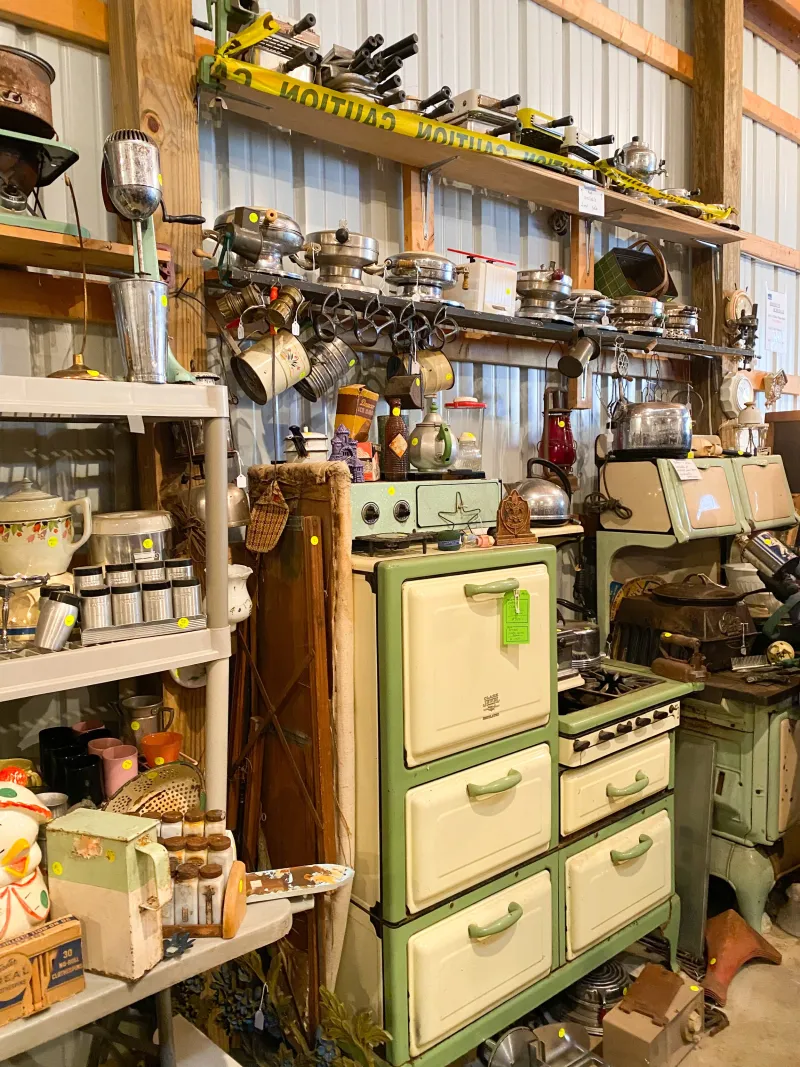
Photo: cluttered estate sale garage vintage items for sale, via images.squarespace-cdn.com
Let me tell you about the chair that broke me.
It was at an estate sale in a sleepy suburb, sitting in a garage between a bread machine and a box of expired coupons. Wicker. Peacock-shaped. The kind of object that exists only because someone, sometime, looked at it and felt joy. The price tag said $4 in faded pen.
Except this time, a young influencer was photographing it, and by the time I'd circled back, the tag had been replaced with a sticky note: $340 — SOLD, vintage whimsigoth piece.
I don't blame the influencer. I blame the algorithm.
When Quirk Became Inventory
Here's the uncomfortable history: for decades, thrift stores and estate sales were the domain of people who had no other option and people who genuinely loved strange things. The wicker peacock was worthless because taste culture said so. That worthlessness was, in a backwards way, protective. Weird stuff was cheap because weird taste was ridiculed.
Then the internet happened. 'Eclectic maximalism' got a mood board. Suddenly every crooked lamp and velour portrait was a 'vintage find,' and the prices reflected a market that had discovered what the weird kids always knew: this stuff is good.
The problem isn't that ugly things became beloved. That part is genuinely wonderful — we've written about it before, and we meant it. The problem is that the loving got outsourced to trend cycles. The peacock isn't $340 because someone treasures it. It's $340 because a screenshot of it performed well.
The Reseller Middleman Problem
Walk into any good thrift store on a Saturday morning and you'll see it: people photographing shelves with one hand and listing on resale apps with the other, arbitraging grandma's taste in real time. Estate sale companies have caught on too — some now pre-pick the 'aesthetic' items and price them at boutique rates before the doors even open.
The people who used to furnish their whole lives for $60 are browsing a museum where everything's behind glass. The original weirdos got priced out of their own ecosystem, and the treasure now flows to whoever has the fastest Wi-Fi.
Keeping the Hunt Alive Anyway
So do we surrender? Absolutely not. But the strategy has to change:
- Go where the algorithms don't. Church rummage sales on Sunday afternoons, rural estate sales, the back room of the VFW. Trend scouts don't drive two hours for a rotary phone.
- Buy the thing you love, not the thing that photographs well. If it wouldn't survive a trend cycle, it's probably actually yours.
- Leave something behind. The hunt stays joyful when it's not a hunger game. Take your peacock. Leave the lamp for the next weirdo.
- Name the dynamic out loud. Vendors respond to their customers. 'This feels overpriced for a garage sale' is a complete sentence.
The wicker peacock economy is a symptom of a bigger truth: when quirk becomes a commodity, the cure isn't to stop loving weird things. It's to love them louder, weirder, and in places no one's filming. The best stuff was never the stuff that trended. It was the stuff that waited patiently in a garage for the one person who'd recognize it.
Be that person. And check the price tag before you fall in love.