You Are What You Vibe: How Your Hyper-Specific Aesthetic Became Your Loudest Personality Trait
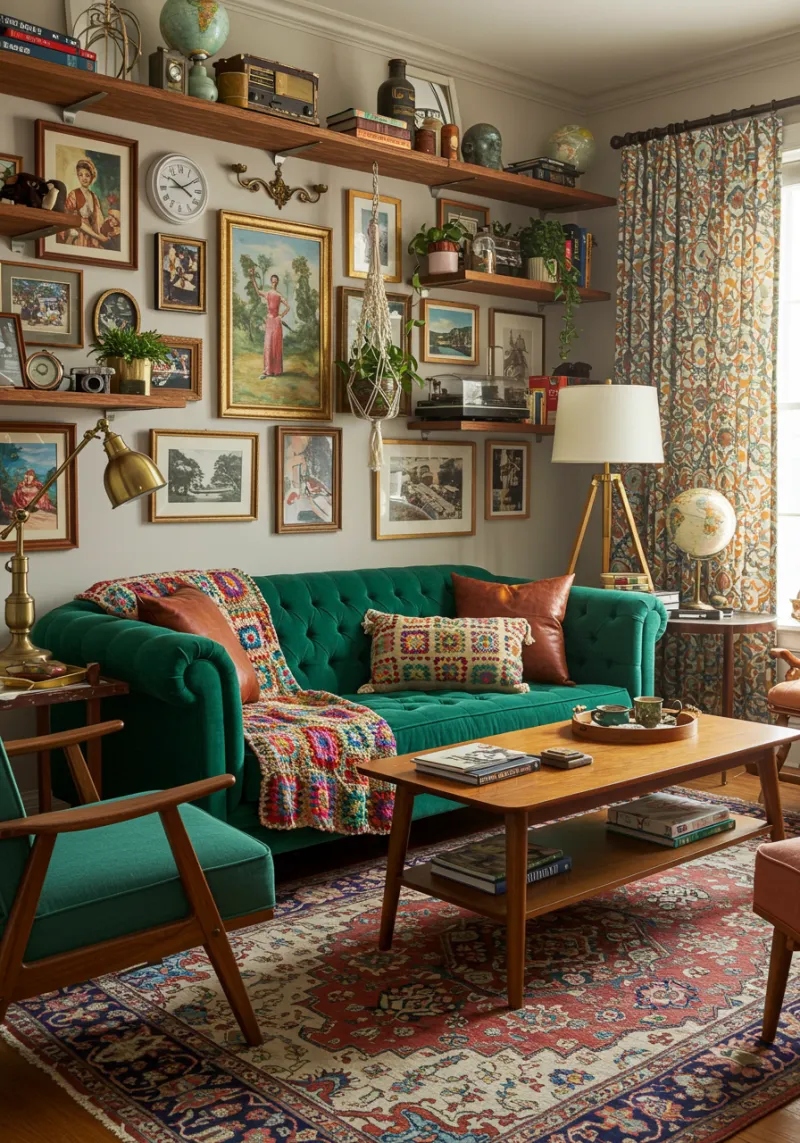
Photo: colorful eclectic aesthetic flat lay vintage objects mood board, via i.pinimg.com
Somewhere between 2019 and right now, simply saying "I like vintage stuff" stopped being a personality. The bar moved. The bar packed its bags, relocated, and now lives in a very specific Brooklyn apartment with exposed brick, a taxidermied squirrel wearing a tiny crown, and a Spotify playlist called "fog & feelings (feat. minor piano)."
Welcome to the age of the micro-aesthetic — where your taste is not just a preference, it's a taxonomy. And if you've ever described your vibe as "goblincore meets Wes Anderson meets sad girl autumn but make it coastal," congratulations: you are fluent in the secret language of hyperspecific identity, and it is absolutely a superpower.
From 'I Like Cozy Things' to a Fully Realized Subculture
Let's back up. Aesthetics have always existed — goth, preppy, bohemian, whatever your high school called the kids who wore band tees. But the internet, and specifically TikTok and Pinterest, gave us the tools to slice those broad categories into increasingly thin, exquisite slivers.
Cottagecore begat dark cottagecore, which begat goblincore, which begat fairycore, which at some point spawned cryptidcore (yes, it's a thing, yes, it involves a lot of flannel and blurry Bigfoot imagery used unironically as decor). "Indie sleaze revival" nostalgia-coded an entire era of American Apparel flash photography and deliberately terrible eyeliner. "Sad girl autumn" gave melancholy a color palette.
These aren't just moods. They're micro-genres of personhood. And people are claiming them with the specificity of a sommelier describing a 2003 Burgundy.
The Psychology of Naming Your Weird
Here's where it gets genuinely fascinating: there's real psychological juice behind our obsession with labeling our aesthetic down to the molecular level.
Researchers who study identity formation have long known that naming something gives you power over it — and ownership of it. When you say "I'm not just into vintage fashion, I'm specifically into regencycore filtered through a 1970s suburban catalog lens," you're doing something cognitively sophisticated. You're building a personal mythology.
Psychologists call this kind of self-categorization a form of identity anchoring — using shared symbolic language to signal group membership and assert individuality at the same time. It sounds contradictory, but it's actually brilliant. The more specific your aesthetic, the more it says exactly who you are — and the faster someone else who shares that specific frequency can find you.
In a world where everyone is shouting into the void of the internet, being hyper-niche is basically a homing signal.
The Instant Community Handshake
Ask anyone who's ever dropped a very specific aesthetic reference in a comment section and immediately received seventeen responses from strangers who felt seen. There's a reason "you get it" has become such an emotionally loaded phrase online.
When you describe your apartment as "thrift-store maximalist with a hint of Victorian séance parlor," you're not just describing throw pillows. You're broadcasting an entire worldview. You're saying: I find beauty in accumulation. I like things with history. I'm a little dramatic and I'm fine with that.
Trend forecasters and cultural analysts who track aesthetic cycles on platforms like TikTok and Pinterest have noted that micro-aesthetic communities form with startling speed — and loyalty. These aren't casual interest groups. People build entire social identities, shopping habits, creative outputs, and friendship circles around a vibe that might have twelve words in its name.
The more granular the aesthetic, the more it functions like a secret society handshake. You either know, or you don't. And when someone knows? That recognition hits different than almost any other form of social connection.
Your Aesthetic Is Doing Emotional Labor (In a Good Way)
Here's something nobody talks about enough: maintaining a hyper-specific aesthetic is actually a form of emotional self-regulation.
When life feels chaotic and uncontrollable — which, hi, welcome to existing in America in the 2020s — curating a very particular visual and sensory world gives you something you can actually manage. You can't fix the news cycle, but you can find the perfect moss-green ceramic mug that completes your "witchy homesteader who reads tarot but also has a 401k" aesthetic.
This isn't shallow. It's coping with style. It's building a sensory environment that communicates your values back to yourself every single day. "I like beautiful, weird, specific things" is a complete sentence about who you are as a person.
The Social Currency of Going Niche
There's also — let's be honest — a social status component here, and it's worth examining without judgment.
In mainstream culture, being ahead of the trend has always carried cachet. But in micro-aesthetic communities, the prestige system flips. It's not about being early to a trend; it's about being authentic to a very specific sensory truth. The person who's been collecting 1980s Fisher-Price toys as art objects since before it had a name on Pinterest has a kind of credibility that can't be faked.
This is why aesthetic naming — even when it gets genuinely absurd ("lakecore," "dark feminine," "bloke-core coastal grandmother crossover") — keeps happening. Naming something stakes a claim. It says: this specific combination of things is real, it matters, and I was here.
How to Speak Your Own Aesthetic Fluently
If you've been quietly accumulating a very specific vibe but haven't quite put words to it yet, here's a gentle invitation to try. Not because you need a label to validate your taste, but because articulating it can be genuinely clarifying.
Start by asking yourself: What three completely unrelated things would you put in a museum exhibit about your soul? What's the specific feeling your ideal Tuesday morning has? If your aesthetic were a scene in a movie, what movie — and what scene?
You don't have to post it anywhere. You don't have to make it a TikTok. But you might find that naming your specific flavor of weird gives you a kind of confidence that's hard to explain until you've felt it.
Because here's the truth that Sasa Panda has always known: the more specifically, gloriously yourself you are, the more magnetic you become. Broad appeal is forgettable. Hyper-specific weirdness is a beacon.
Somewhere out there is a person who also thinks "Victorian séance parlor meets chaotic thrift maximalism" is the peak of interior design. They're looking for you.
Give them something to find.